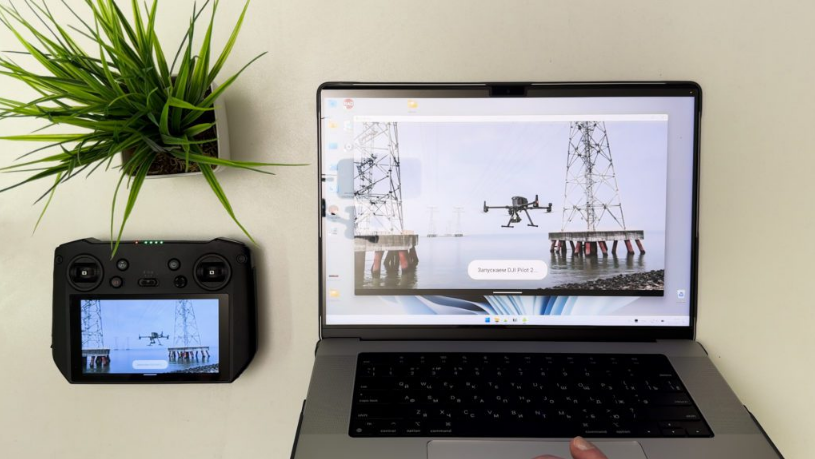
DJI drones incorporate different transmission power modes that significantly impact operational range and signal reliability. These modes are automatically selected based on the detected geographical region of flight, explaining why identical drone models may exhibit different performance characteristics in various parts of the world.
In summary:
A significant difference exists in transmission strength between the two modes:
In summary, FCC mode provides a stronger signal with extended range, whereas CE mode operates at reduced power levels to adhere to regional regulations.
In summary:
- FCC mode = maximum permitted power
- CE mode = reduced regulatory power
A significant difference exists in transmission strength between the two modes:
- FCC: up to 400 mW or 640 mW, depending on the drone/controller model
- CE (used in most countries, including Europe and Russia):
- 2.4 GHz: max 100 mW
- 5.8 GHz: max 25 mW (and 5.8 GHz is often unavailable by default)
In summary, FCC mode provides a stronger signal with extended range, whereas CE mode operates at reduced power levels to adhere to regional regulations.
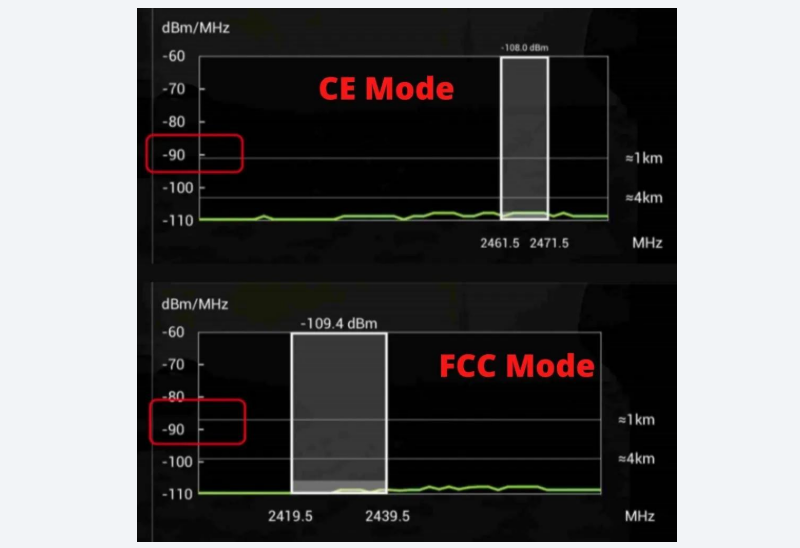
Visual Comparison: FCC vs CE Mode
Within CIS countries, the transmission power in FCC mode is approximately four times greater than in standard CE mode. If the 5.8 GHz frequency band were enabled by default in these regions, the power difference compared to the U.S. standard could reach up to sixteenfold.
Notably, in FCC mode, the transmission power is equal for both the 2.4 GHz and 5.8 GHz bands.
While the longest theoretical range is achieved on the 2.4 GHz band, this holds primarily in open, rural areas. In urban environments, the 2.4 GHz spectrum is often congested with interference from Wi‑Fi networks and other devices, reducing signal reliability.
Therefore, in cities, drones typically maintain a more stable and longer effective connection on the clearer 5.8 GHz band. However, in most regions, consumer drone access to this band is restricted by default, leading to frequent signal loss just a few hundred meters from the pilot.
To overcome these regulatory limitations and unlock full-power FCC mode, 5.8 GHz access, and enhanced transmission capabilities, the ONE system provides the necessary tools and modifications.
Notably, in FCC mode, the transmission power is equal for both the 2.4 GHz and 5.8 GHz bands.
While the longest theoretical range is achieved on the 2.4 GHz band, this holds primarily in open, rural areas. In urban environments, the 2.4 GHz spectrum is often congested with interference from Wi‑Fi networks and other devices, reducing signal reliability.
Therefore, in cities, drones typically maintain a more stable and longer effective connection on the clearer 5.8 GHz band. However, in most regions, consumer drone access to this band is restricted by default, leading to frequent signal loss just a few hundred meters from the pilot.
To overcome these regulatory limitations and unlock full-power FCC mode, 5.8 GHz access, and enhanced transmission capabilities, the ONE system provides the necessary tools and modifications.